



A perfect gin and tonic is one of the simplest drinks you can make, and one of the easiest to get slightly wrong. Get four things right, the ratio, the ice, the glass and the garnish, and you turn an everyday pour into something special. We make award winning gin by hand in Stirling, so here is how we build the perfect gin and tonic, and how to match it to the gin in your glass.
There is no bar training needed and no special kit. Just a good bottle, a good tonic and a few minutes. Here is the method we teach on our Gin Experience.
The simple method, step by step
Build a perfect G and T in six steps. The order matters more than you would think.
- Chill the glass. A cold glass keeps everything crisp. Pop it in the freezer for a few minutes or fill it with ice while you gather the rest.
- Fill with ice. Use more ice than feels sensible, right to the top. Plenty of ice melts more slowly, so it chills without watering the drink down.
- Pour the gin. A 50ml measure is the standard single serve. Pour it over the ice.
- Add the tonic slowly. Pour it gently down the side of the glass or over a bar spoon to protect the bubbles. Cold tonic, straight from the fridge.
- Garnish with intent. One or two pieces that echo the gin, not a fruit salad. More on this below.
- Stir once, gently. A single slow stir to combine. Stir hard and you knock the fizz straight out.
That is the whole method. The difference between a good G and T and a great one is in the details that follow.
The right ratio, and how strength changes it
The gin to tonic ratio is a matter of taste, but there is a simple scale to work from. A 1 to 2 pour, one part gin to two parts tonic, is the everyday serve most people love. Go 1 to 1 for a stronger, gin forward drink, or 1 to 3 to lengthen and soften it.
Here is the part most guides miss: match the ratio to the strength of the gin. A punchy navy strength gin needs more tonic to balance it than a standard gin, or it will run hot. Use this as a starting point.
| Gin strength | Suggested ratio | Why |
|---|---|---|
| Around 40 percent | 1 to 2 | The classic, balanced everyday serve |
| Around 43 percent, like Stirling Gin | 1 to 2 | Enough tonic to open the botanicals without drowning them |
| Flavoured or pink, 37.5 to 40 percent | 1 to 2 or 1 to 3 | A little more tonic lets the fruit and floral notes shine |
| Navy strength, 55 to 57 percent | 1 to 3 | Extra tonic tames the strength and keeps it drinkable |
Start here, then trust your own palate. The best ratio is the one you enjoy.
Ice, tonic and glass
These three quiet details do most of the work in a perfect gin and tonic.
Ice. Fill the glass. Lots of ice keeps the drink colder and, because it melts slowly, it dilutes far less than a few sad cubes. Warm drinks water down fastest.
Tonic. This is the most common mistake by a mile. Tonic is half the drink, so use a good one and make sure it is cold and freshly opened. A flat, warm or cheap tonic will flatten even the finest gin. A premium or Mediterranean tonic is worth it.
Glass. A large copa or a big wine glass beats a small tumbler. The wide bowl holds plenty of ice, gathers the aromatics towards your nose, and keeps the drink colder for longer. It is not just for show, it genuinely tastes better.
Garnish: match it to the botanicals
The golden rule of garnish is simple: your garnish should echo a botanical already in the gin, lifting a flavour that is there rather than fighting it. A slice of lemon in everything is a wasted opportunity. Use this table as a ten second guide.
| Gin style | Best garnish | What it lifts |
|---|---|---|
| Classic citrus led gin | Orange peel or a lemon wheel | The bright citrus in the spirit |
| Floral or pink gin | Pink grapefruit wedge or a single rose petal | The soft floral and berry notes |
| Spiced or winter gin | Orange and a cinnamon stick | The warm baking spice |
| Navy strength gin | A bold citrus wedge and extra tonic | Balances the higher strength |
| Herbal or juniper heavy gin | A sprig of rosemary or basil | The green, herbal side |
One or two well chosen garnishes is plenty. Over garnishing muddies the drink and hides the gin you paid for.
The distiller's serve for each Stirling gin
Because we distil these gins ourselves, we know exactly what to reach for. Here is the serve we recommend for each, tied to the botanicals we actually use.
Stirling Gin. Our classic, juniper led with a hand foraged local nettle. Serve 50ml over ice with a good Mediterranean tonic, at 1 to 2, and garnish with a twist of orange peel and a single basil leaf. The orange lifts the citrus and the basil picks up the green, herbal notes.
Stirling Pink Gin. Soft and fruity, with rose and pink grapefruit. Serve long over plenty of ice with a light tonic or soda, and garnish with a wedge of pink grapefruit to echo that fruit. A lovely, easy summer pour.
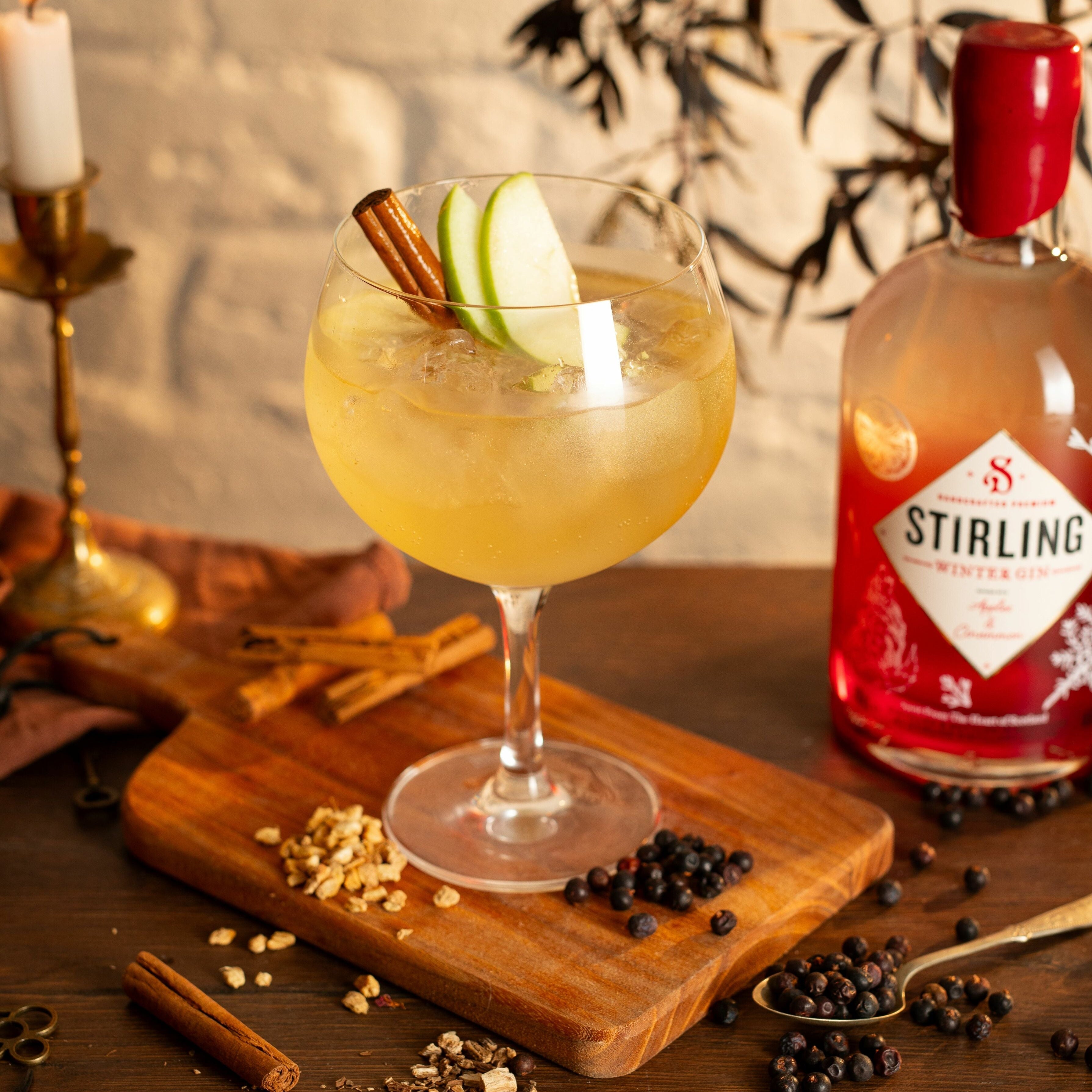
Stirling Winter Gin. Warming and spiced, with baked apple. Serve with a full flavoured tonic and garnish with a slice of orange and a cinnamon stick to bring out the spice. It also makes a cracking hot serve in the cold months.
Battle Strength Gin. Our navy strength gin at 55 percent, bold and juniper forward. Give it more tonic, at 1 to 3, over lots of ice, with a thick wedge of orange or grapefruit. The extra tonic tames the strength while the gin still cuts through. If you want a dressed up garnish, a few of our dried oranges look the part.
Common mistakes to avoid
Sidestep these and your gin and tonic improves straight away.
- Warm or flat tonic. Keep it cold and freshly opened.
- Too little ice. Fill the glass, do not ration it.
- The wrong glass. A big copa or wine glass beats a small tumbler.
- Over garnishing. One or two pieces that match the gin, not a fruit bowl.
- Stirring too hard. One gentle stir keeps the fizz.
- Skimping on the tonic. It is half the drink, so make it a good one.
Frequently asked questions
What is the best ratio for a gin and tonic?
A 1 to 2 pour, one part gin to two parts tonic, is the balanced everyday serve. Go 1 to 1 for a stronger drink, or 1 to 3 to lengthen it. A navy strength gin at 55 percent or more is best at 1 to 3 to tame the strength.
What glass is best for a gin and tonic?
A large copa or big wine glass is ideal. The wide bowl holds plenty of ice, gathers the aromas towards your nose and keeps the drink colder for longer, which a small tumbler cannot do.
Do you put ice or gin in first?
Ice first, then gin, then tonic. Fill the glass with ice, pour the gin over it, then add cold tonic slowly down the side to protect the bubbles.
What garnish goes with pink gin?
A wedge of pink grapefruit is the perfect match, echoing the soft fruit and floral notes. A single rose petal works too. Keep it simple so the gin leads.
What is the best tonic water for a gin and tonic?
A premium or Mediterranean tonic, cold and freshly opened. Tonic is half the drink, so a flat or cheap one will flatten even a great gin. It is the easiest upgrade you can make.
Does the gin you use matter?
Yes. A well made gin gives you more to work with, from the botanicals to the strength. A juniper led gin like our Stirling Gin makes a crisp, classic G and T, while a navy strength gin brings more punch and needs more tonic.
That is how to pour a perfect gin and tonic every time. Ready to put it into practice? Explore our award winning Stirling Gin, try more serves in our gin cocktail recipes, or learn hands on at the Gin Experience at the distillery. You can also see our house pour in our classic Stirling G and T recipe.