



There are more types of gin than ever, and the labels can be confusing. At its heart, gin is simply a spirit led by juniper, but from there the styles branch out through different botanicals, sweetness and strength. As a working Scottish distillery, we make several styles ourselves, so here is a plain guide to the main types of gin and how to pick the one you will enjoy.
Whether you are choosing a bottle to gift, deciding what to pour, or just curious what all the names mean, this quick tour will sort one gin style from another.
What makes one gin different from another
Every gin starts with juniper, but three levers decide its character.
- Botanicals. The mix of herbs, spices, roots and fruits distilled with the juniper. This is where citrus, floral, spicy or herbal notes come from.
- Sweetness. Some styles are bone dry, others are lightly sweetened after distillation, which softens the edges.
- Strength. Most gins sit around 40 percent, but navy strength climbs to around 57 percent for a bolder pour.
Ageing is a fourth, less common lever. A short spell in a cask adds oak, vanilla and colour. Change any of these and you change the style.
The main types of gin at a glance
| Style | Taste | Strength | Best serve |
|---|---|---|---|
| London Dry | Dry, juniper forward, crisp | Around 40 to 47 percent | Classic gin and tonic |
| Old Tom | Softer, lightly sweetened | Around 40 percent | Tom Collins or Martinez |
| Plymouth | Softer, earthier, less sharp | Around 41 percent | Gin and tonic or Martini |
| Navy Strength | Bold, intense, warming | Around 57 percent | Strong cocktails, a punchy G and T |
| New Western | Botanical forward, less juniper heavy | Around 40 to 45 percent | Gin and tonic with a matched garnish |
| Flavoured | Fruit or botanical infused | Around 37.5 to 40 percent | With tonic or lemonade |
| Pink | Fruity, soft, often berry led | Around 37.5 to 40 percent | Over ice with tonic |
| Sloe | Sweet, rich, liqueur style | Around 25 to 29 percent | Neat, over ice, or topped with fizz |
London Dry Gin
London Dry is the classic most people picture when they think of gin. It is dry and juniper forward, with all the flavour coming from botanicals distilled with the spirit and nothing sweet added afterwards. The name is a style, not a place, so a London Dry can be made anywhere, including here in Stirling. Our own Stirling Gin sits in this camp, juniper led and crisp, with a hand foraged local nettle among the botanicals.
Best serve for London Dry
A generous gin and tonic with a good chilled tonic and a simple citrus garnish lets the juniper and botanicals shine.
Old Tom Gin
Old Tom is an older style that sits between rich Dutch genever and modern dry gin. It is lightly sweetened, so it feels softer and rounder on the palate. That gentle sweetness makes it a favourite for classic cocktails such as the Tom Collins and the Martinez, where it adds body without tasting sugary.
Plymouth and other regional styles
Some gins are tied to a place. Plymouth gin, for example, is a protected style that can only be made in Plymouth, and it is known for being a little softer and earthier than a sharp London Dry. Regional styles like this show how much geography and tradition can shape a gin, even when the core recipe looks similar on paper.
Navy Strength Gin
Navy strength is simply gin at a much higher proof, traditionally around 57 percent. The extra strength makes it bold and warming, and it holds its own in cocktails where a standard gin would get lost. Our Battle Strength is our take on this style, intense and full of character, and it shows how a higher strength gin can stand up to a strong mixer or a busy cocktail.
New Western and contemporary Scottish gin
New Western, sometimes called contemporary gin, is the fastest growing style. Here juniper is still present but shares the stage with other botanicals, so citrus, floral or herbal notes can lead. It is where a lot of the most exciting Scottish gin lives, because it gives a distillery room to build a local character. In our still we lean on Scottish botanicals to give our gins a sense of place, which is exactly what this style is about: gin that tastes of where it is made rather than a single template.
Flavoured gin, pink gin and sloe gin
These three often get lumped together, but they are different things.
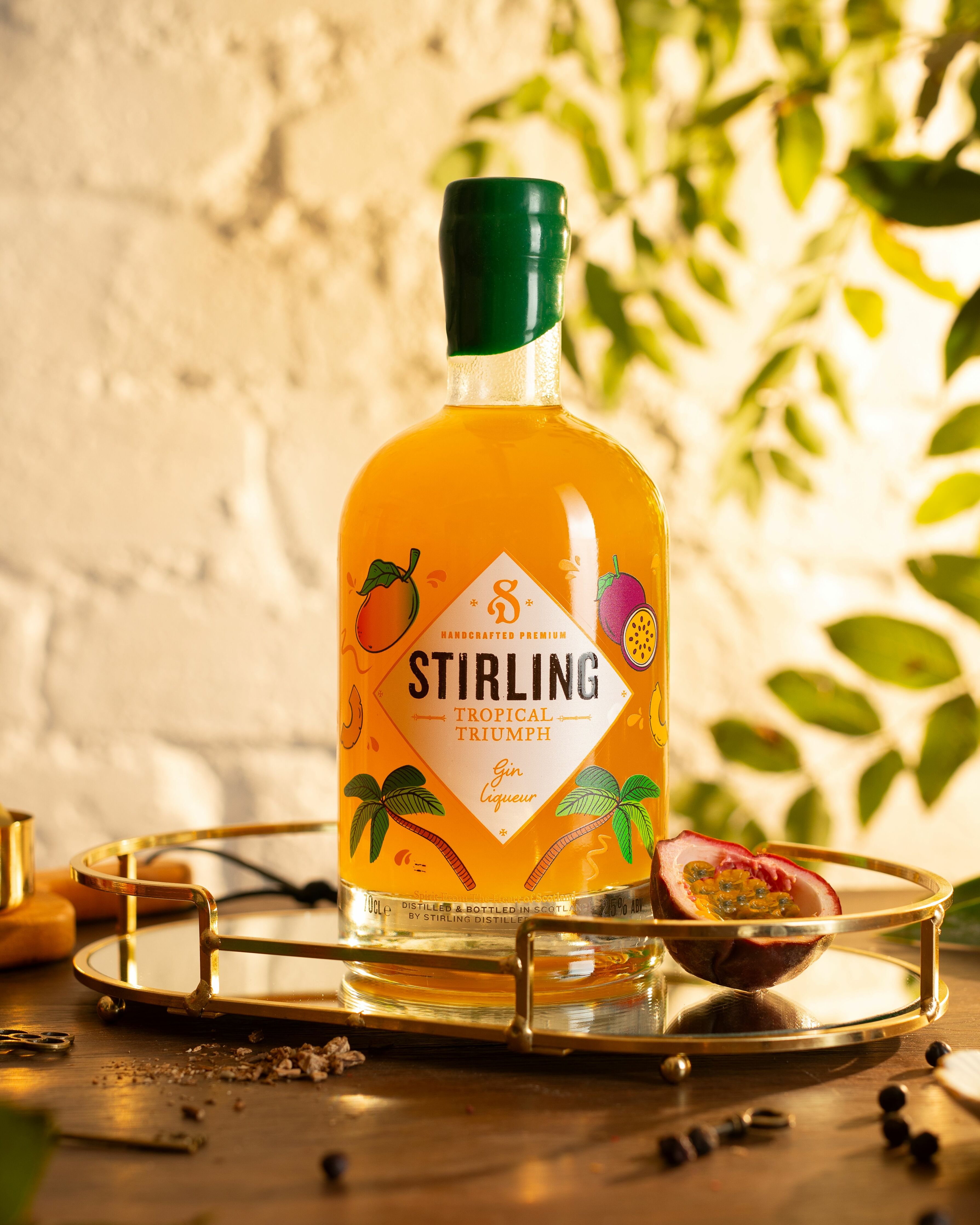
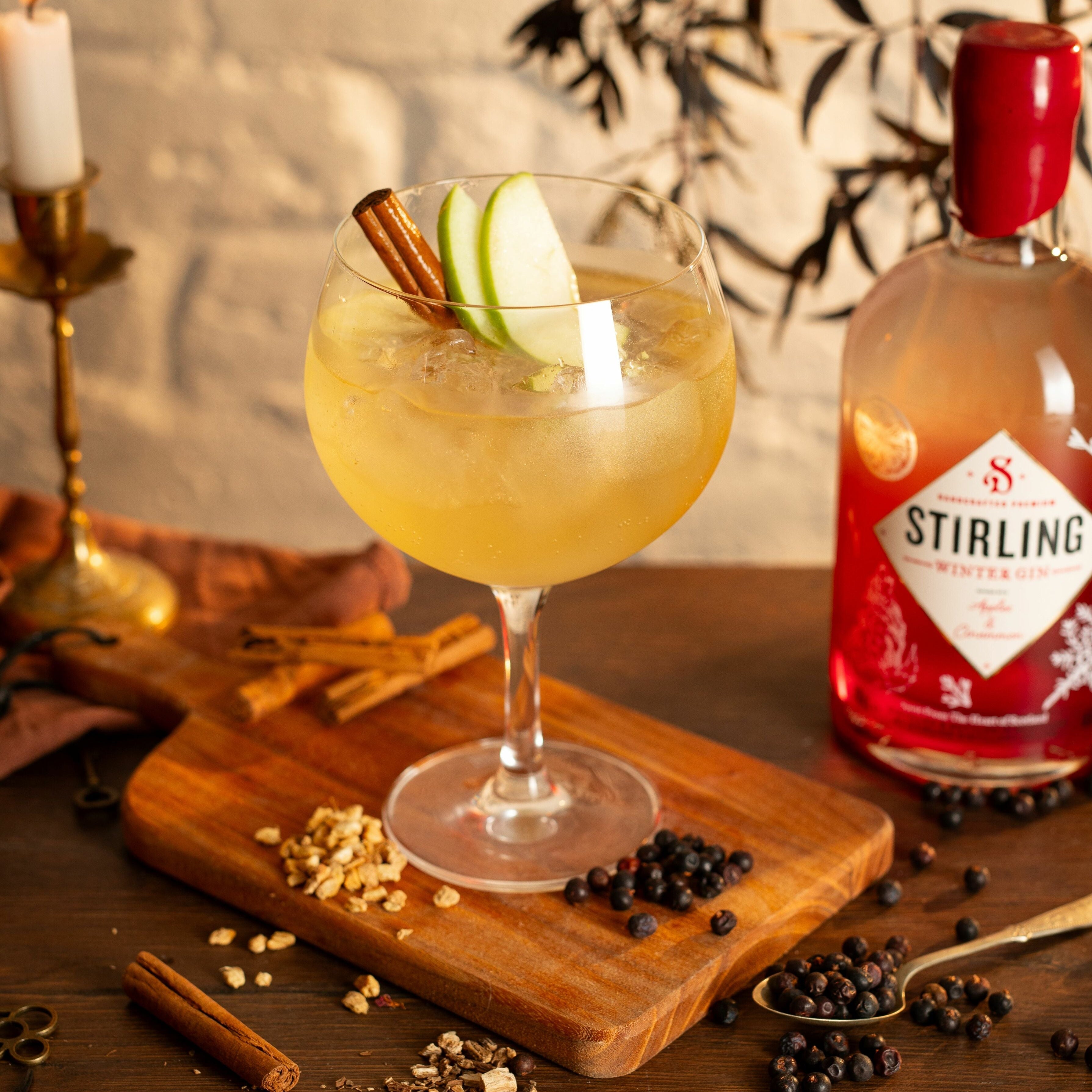
Flavoured gin is gin infused with fruit, botanicals or spice, so the added flavour comes through clearly while it stays a proper gin. Our Stirling Winter Gin is a warming, spiced example.
Pink gin takes its colour and soft, fruity character from fruit such as berries or rhubarb. It is usually a touch sweeter and very easy to drink over ice. Our Stirling Pink Gin is a good example, soft and fruity with tonic.
Sloe gin is really a liqueur. Sloe berries are steeped in gin with sugar, giving a sweet, rich, lower strength drink that is lovely neat, over ice or topped with fizz.
Barrel aged gin
Barrel aged gin spends time resting in wood after distilling. The cask adds oak, vanilla and gentle spice, along with a golden colour, giving a gin that drinks a little like a bridge between gin and a light whisky. It is a small style, but a lovely one to sip.
Which type of gin should you choose
The easiest way to choose is to match the style to the drink you want.
- For a crisp gin and tonic: a London Dry or a contemporary Scottish gin.
- For a stirred Martini: a dry, juniper forward gin that stays clean.
- For a bold Negroni or a strong cocktail: a navy strength gin that cuts through.
- For sipping and sweetness: a pink gin over ice, or a sloe gin neat.
- For a gift: a flavoured or pink gin is approachable, while a navy strength suits a serious gin lover. Our Scottish gin gifts wrap any of these ready to give.
Taste the styles for yourself
The quickest way to understand gin styles is to taste them side by side. You can do exactly that on a gin tasting experience with us, or go further and learn to distil your own at our Gin School, where you build a gin from the botanicals up.
Frequently asked questions
How many types of gin are there?
There is no fixed number, but most gin falls into around eight main styles: London Dry, Old Tom, Plymouth, navy strength, New Western or contemporary, flavoured, pink and sloe. Barrel aged gin is a smaller extra style.
What is the most popular type of gin?
London Dry is the most widely known and the classic choice for a gin and tonic, though contemporary and pink gins have grown hugely in recent years.
Is pink gin real gin?
Yes. Pink gin is a proper gin that takes its colour and fruity character from fruit such as berries or rhubarb. It is often a little sweeter and softer than a dry gin.
What is the strongest type of gin?
Navy strength is the strongest common style, at around 57 percent, which makes it bold on its own and hard to lose in a cocktail.
Once you have found your style, learn how to make the perfect gin and tonic to show it off.
Now you can read a gin label with confidence. When you are ready to find your favourite, explore our range of Scottish gins, made by hand beneath Stirling Castle.